


§ 3. Counting
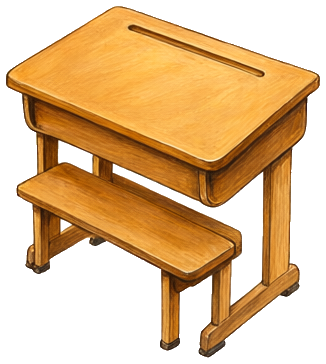
To find out how many desks are in a classroom or how many trees are in a garden, we must count them. Counting consists in separating one object after another (either in reality or merely in the mind) and naming the number of separated objects each time. Thus, when counting the desks in a classroom, we mentally separate one desk after another and say: one, two, three, four, and so on. If, upon separating the last desk, we said, for example, eight, then there are eight desks in the classroom; the number eight is, in this case, the result of the count. We accept as an evident truth that the result of the count does not depend on the order in which we count the objects. Thus, when counting the desks in a classroom, we will obtain the same number regardless of whether we count from the front desks to the back or from the back to the front. It is important only that, during the count, no desk is skipped and no desk is counted twice.
 1 → 2 → … → 8
8 ← … ← 2 ← 1
✓ × 8 desks
